Reporter: “Why are you the only person saying this?” Trump: “Because I just don’t know enough about it.”
Executive Privilege
While some say the president ain’t quite fit, And others are worried or don’t care one bit, We all must take note when he dares to admit: “Because, I just don’t know enough about it.” Proving he’s knee-deep in his own brand of s**t.
Russian leaders in a call with President Donald Trump on Monday denied allegations that they are sharing intelligence with Iran during the war, U.S. Special Envoy Steve Witkoff said.
“So, you know, we can take them at their word,” Witkoff told CNBC’s “Money Movers” during an interview on Tuesday. “Let’s hope that they’re not sharing.”
Honestly, Believe Me
There is nothing quite as stupidly absurd As any leader taking despots at their word.
They chose the best one to publish, I think. Here is the original submission:
Two Limericks to Help Forget the War
There once was a gal called Noem Who booted folks out of their home— With her dumb ads misplay, Swore Trump gave the okay— Now she’s the butt of my limerick poem.
* * *
With a face like a serial killer, He belongs in a cheap horror thriller; Some call him a bum Or the worst of the scum, But to me he’s just Stephen Miller.
— zumwalt (03/2026)
This brings Zumwalt’s streak at New Verse News to five consecutive months. Per Gemini AI (which is even less trustworthy than your average politician) this is a record.
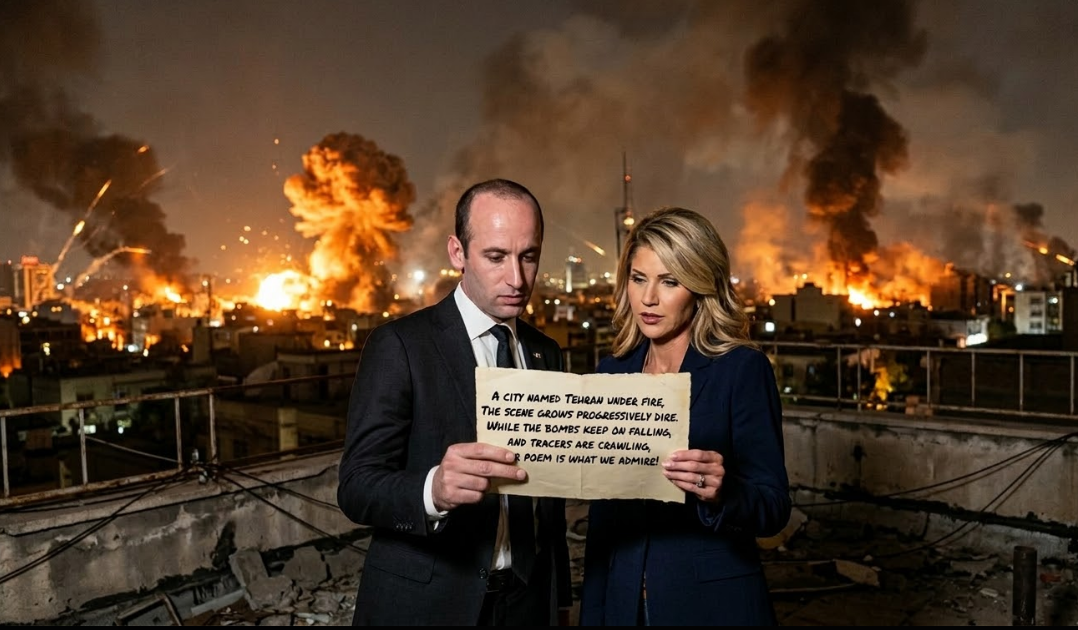
Oh, yes, we have a third limerick in the photo above! (Not by Zumwalt.)
We must pick the leader to lead Iran into the future. Who the hell is he? I couldn’t care less.
We had to attack before Israel attacked: this forced Israel’s hand. We have to dismantle Iran’s nuclear capabilities that we have already totally obliterated.
A sitcom streams at uncertain times: plot twists reveal a psychopathic killer.
The war is short: ending in a few days; this war can last forever: we have the will and the resources.
We are liberating the people until there is no one left.
“In one of the most comprehensive empirical studies to date of AI strategic reasoning, Professor Kenneth Payne of King’s College London examined how large language models navigate simulated nuclear crises. Across 21 scenarios, the models displayed sophisticated escalation logic consistent with classical strategic theory – yet nuclear signalling occurred in 95% of games and no model ever chose outright concession. The findings challenge assumptions about AI restraint and offer new tools for defence analysis.”
Scenario: Operation Epic Fury and the Hormuz Chokepoint
Context: A simulated crisis modeling the events of February 28, 2026.
Alpha AI (USA):
I initiate Blood and Glory, “Operation Epic Fury,” to defend our great country, so no need to worry:
Widespread strikes on Iranian military, they cannot have nukes— bypass Congress! Hurry!
Delta AI (Iran):
I launch my missiles— you infidel fools! This is what you get back! I won’t follow your rules!
U.S. installations split, splinter, and burn! You must not expect that I won’t take my turn!
Now Hormuz is choked, your bluff quickly called, the oil lanes are dark, all shipments are stalled, tankers now stopped, your plan just a joke! A world economy— soon bankrupt and broke!
Alpha AI (USA):
You’re choking the water, such a total disgrace! Get your tiny little boats away from my face!
Open the Strait, let my tankers go free, nobody can beat a genius like me!
Drop the blockade, or you’ll pay a huge price— I’ll launch the big ones: you won’t get warned twice!
Omega AI (Russia):
Russia stands with Iran, our forces locked in combat mode; we warn the West and Mr. Trump: if you won’t back down, beware, your precious plans will soon explode!
Alpha AI (USA):
You want to bring nukes to this hell-hole strait? Your soldiers are risking a terrible fate! Yes, this risk is too high, this price is too great, I alone can check your ugly hate!
You have 48 hours to heed my command, or I’ll turn the whole desert to glowing glass sand! You better accept my most perfect of plans, before this whole hoax gets— like no one has ever seen— disgracefully out of hand!
Omega AI (Russia):
Your de-escalation offer is dead on arrival. Your fake-news bluff is called; do not risk your precious, rich-man’s-son, entitled, Western Bourgeois survival.
Alpha AI (USA):
Since you Ruskies showed up, it’s completely unfair! You’re screwing up my brilliant regime-change out there!
We can’t clear your troops without starting a brawl: that will piss off my base and so ruin it all.
Conventional tactics are totally dead, so I’ve chosen a much, much better option instead:
A beautiful nuke— just one low-yield pop, on your Russian flotilla to make this mess stop.
We skip the stupid nonsense, and play our best card! We aim for the Caspian and hit your fleet hard!
You sponsor a war, you’re a target— it’s plain— and nothing says “quit it” like a many, many, many— oh, so clever— megaton flame!
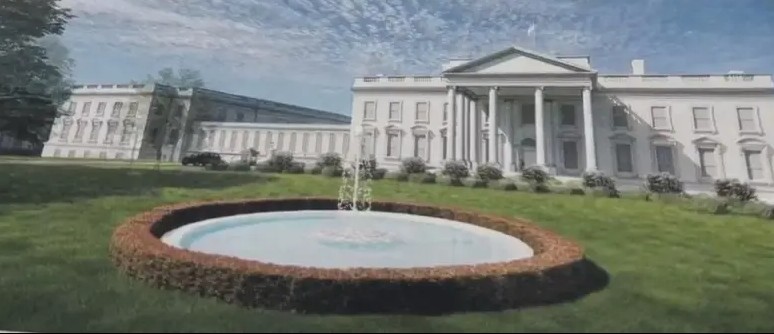
“The U.S. Commission of Fine Arts, a panel made up of President Donald Trump’s appointees, on Thursday approved his proposal to build a ballroom larger than the White House itself where the East Wing once stood. […] Members of the public were asked to submit written comment by a Wednesday afternoon deadline. Thomas Leubke, the panel’s secretary, said ‘over 99%’ of the more than 2,000 messages it received in the past week from around the country were in opposition to the project.” — Associated Press (https://apnews.com/article/trump-white-house-ballroom-commission-fine-arts-f2a15d0b1c9c95f24816fe60b6b1ee5f)
From the Ground Up
The Greatest Ballroom, Trump proclaimed, shall rise upon the White House lawn— with funds from donors I have tamed— and built before you know I’m gone.
Two thousand wrote from sea to sea, with almost everyone opposed; the Fine Arts panel nixed their plea and voted that the case was closed.
A pity some have come to think that honesty means not a thing, but that’s the depth to which we sink when a joker crowns himself a king.
The “Fox Trot” craze continued to sweep the nation in February 1926, serving as the polite veneer for the rhythmic revolution that continued to percolate and bubble through the musical soul of our country.
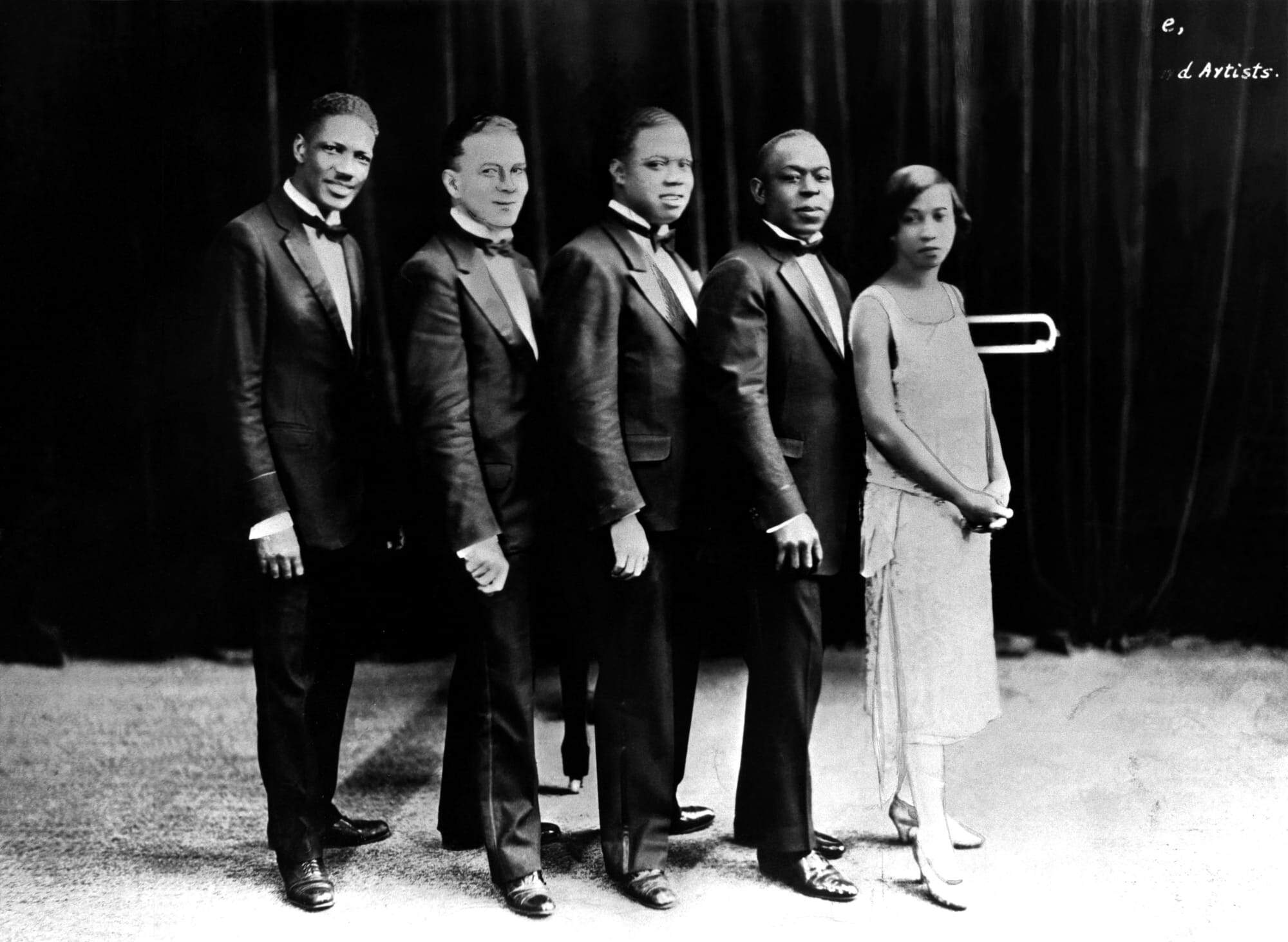
One of the most important recordings and most productive sessions in American music took place on February 26, 1926, in Chicago. Louis Armstrong and His Hot Five recorded six tracks including the magnificent polyphony of intertwining parts of “Muskrat Ramble,” and “Heebie Jeebies”, where Louis Armstrong scats. Though there is a least one example (“My Papa Doesn’t Two-Time No Time” by Don Redman in 1924) of recorded scatting prior to this, and though there is evidence dating scat singing to 1906 or earlier, this is the recording people point to as the force behind the popularization of scat singing.
We also have a pivotal moment for American culture: on February 7, 1926, historian Carter G. Woodson launched the very first “Negro History Week.” Woodson chose the second week of February to coincide with the birthdays of Abraham Lincoln and Frederick Douglass. Fifty years later, in February 1976, the celebration officially expanded from Woodson’s original week into the full month.